CharlotteObserver.com: Breaking News

Showing posts with label chrysler. Show all posts

Tuesday, July 30, 2013

Summer Clearance Sale on all Tires in Charlotte, NC


All tires are on Summer clearance starting at just $40 bucks. It doesn't get any cheaper any where in the world. Call now for multiple locations in Charlotte and Ballantyne. 704-553-9800

Tires in Charlotte, NC are the cheapest ever starting right now. Call now, Lines are open. 

Book SAME DAY Appointments Online Now


Tires for Charlotte, Tires for the World.

South Charlotte Location

8 Minutes from Ballantyne Country Club

4 Minutes from Carolina Place Mall

8 Minutes from Carrowinds

12 Minutes from downtown Fort Mill

Uptown Location:

2 Minutes from Bo Jangles Area

8 Minutes from the heart of Uptown

5 Minutes from Dilworth

Elizabeth area

PLUS, roll back prices on all auto repairs - Honda, Toyota, BMW, Mercedes, GMC, Chevy, Ford, Dodge, Chrysler, Porsche, Volvo, Saab. 


Ford Repair, Toyota Repair, Honda Repair, Aston Martin repair, Chevrolet Repair, Dodge Repair, BMW Auto Repair, Acura Repair, Nissan Repair, Volkswagen Repair, Chrysler Repair, Common Car Models, Honda Accord Repair, Toyota Camry Repair, Honda Civic Repair, Acura TL Repair, Audi Repair, Toyota Corolla Repair, Buffalo Tire Building on Monroe Rd, Ford Taurus Repair, Woodie, NAPA, Napa Auto Care Center, Volkswagen Jetta Repair, BMW 325i Repair, Ford Explorer Repair, Ford Escort Repair, Brembo brakes, Honda shop, Garage, Swedish, Euro Car Repair, Bimmer Shop, 

Wednesday, July 25, 2012

How to care for an aging car

As the U.S. economy continues to battle tough headwinds, many drivers are keeping their cars longer. The average age of a passenger vehicle in the U.S. has increased to about 11 years, according to researchers R.L. Polk. (It was only nine years back in 2000.) 


Here are some of the things you can do to help keep these vehicles stay alive and well: 

Love Your Cooling System

Hoses that carry engine coolant live a hard life. They're forced to transport high-pressure fluids that can exceed a rubber-scorching 240 F. Meanwhile, the water pump gets no respect—no respect at all—even though the engine would die without it in minutes. In retaliation, these components conspire to fail on aging cars at the worst possible times and places—extremely hot or cold days in areas with poor cell coverage are among their favorites. 

If you don't know when your old vehicle's coolant hoses were last replaced, now would be a good time to do it. Don't forget heater hoses, which carry hot coolant into the passenger compartment. As for water pumps, they often warn of their impending death by emitting an odor reminiscent of pancake syrup or by piddling green fluid on the garage floor. If you're already undertaking significant work on the engine in an older car, go ahead and replace the water pump while things are disassembled. 

Brake Time

Keeping the braking system youthful will help your vehicle live long and prosper. If you inherited or purchased an older car, bleed the brakes. With a helpful friend, the right tools, and a repair manual, brake bleeding is no harder than an oil change. 

If the brake fluid flows a clear, amber color, the system likely has been recently rebuilt and well-maintained. If the fluid spurts out dark black and is filled with bits of rubber and rust, a complete brake overhaul is your first priority. 

Brake jobs are to DIY mechanics what blue-square runs are to a snow skier: Not too challenging for those with intermediate skills.

To keep your brake system young, flush (completely replace) the brake fluid every two years. And, like we said about the cooling system, if you're already dissembling the brakes for major repairs, check on the smaller pieces while you're in there. If your car is more than seven years old, replace the rubber brake lines when major brake work is required. If the rotors or brake drums must be removed, check the wheel bearings. 

Black Gold

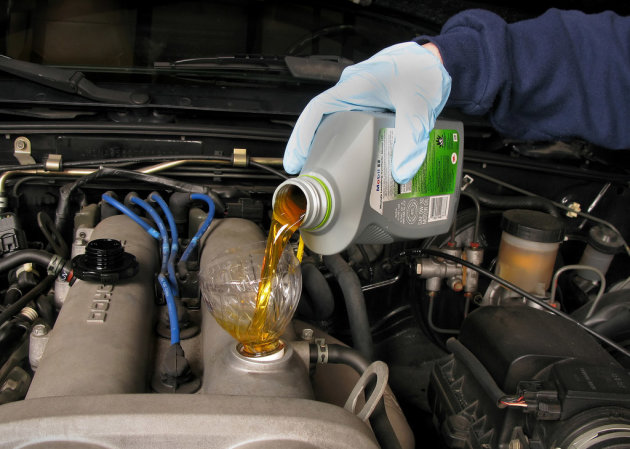
When you remove the engine oil-drain plug of an old car, you hope to discover a not-too-dark amber fluid. If the fluid that flows from your crankcase is jet black and contains bits of silvery flakes, you've got problems. A worse sign is if the oil struggles out like curdled milk. 

When faced with such a situation, try this high-colonic procedure: Drain the oil, replace the oil filter, fill the crankcase with synthetic oil (which acts like a solvent for sludge), and drive the car 50 or 100 miles. Repeat until the oil runs almost as clear as new. If you find little progress after three changes or suspect the previous owner was negligent on oil changes, consider having a professional mechanic remove and clean the oil pan. 

Don't DIY Everything

Cars are just like people. As they age, they require more attention from specialists, especially in the regions most critical to their ongoing survival. 

So periodically have an independent repair shop check critical steering and suspension components. Very experienced DIYers can do this work themselves, but even experts might choose to farm it out to someone who does this work every day just for the added peace of mind. If you repack your front wheel bearings can you concentrate on keeping your right foot to the floor while wondering if you'd done the job correctly?


Monday, June 20, 2011

Used Cars to Avoid


For many of cash-strapped motorists in Charlotte, NC, buying a used car or truck, rather than a brand-new one, is an option based on sheer necessity. The average transaction price of a new vehicle is nearly $30,000 according to TrueCar.com, an industry research and forecasting company–a figure far too steep to absorb for many U.S. households. Consumers can indeed save thousands of dollars selecting a pre-owned car but buyer beware: shopping for a used vehicle can be in many ways far more difficult–and certainly more perilous–than buying a new one.

As Charlotte's premiere auto repair center, Carolina Tire & Auto knows a tremendous amount of information about all makes and models of cars we service and repair. So we compiled a short list of used cars to avoid, based on data from multiple sources including reliability surveys, resale values and safety ratings, along with our own real world Carolina Tire & Auto experiences of repairing and road-testing these vehicles. However, our selections are largely based on the most recent J.D. Power & Associates U.S. Vehicle Dependability Study which determines the least dependable three-year-old cars. The results are based on responses from more than 43,700 original owners of 2008 model-year vehicles regarding problems experienced during the prior 12 months. All of the models on our list were rated “below average” in overall reliability, specifically powertrain performance (engine/transmission/suspension); issues with the body and interior treatments; and failures with features and accessories.

Expensive and reportedly repair-prone, with fuel economy at a thirsty 12 mpg in city driving, suffering high maintenance and repair costs and facing a steep and costly drop in resale value between the third and fifth years of ownership, the negatives tend to far outweigh the positives as regard this moderately sporty British luxury SUV. Developed as a livelier alternative to its larger non-Sport Range Rover sibling, the 2008 vintage comes powered by a relatively lackluster choice of engines rated at 300 and 390 horsepower (versus 375/510 horses for the 2011 model). Laden with gadgetry, this generation of the Range Rover Sport remains plagued by what remain among the most confusing dashboard ergonomics in the auto industry. As far as repairs and service go, they are very expensive to maintain.


With a storied nameplate that was resurrected for the 2006 model year, the full-size Charger sedan comes wrapped in throwback exterior styling, while the Magnum was cast as an aggressive-looking station wagon. Both are related to the Chrysler 300, which boasts higher marks in the J.D. Power & Associates U.S. Vehicle Dependability Study for body and interior durability. Though enthusiasts may prefer the cars' rear-wheel-drive configuration for its inherently crisper handling qualities, they tend to slip and slide on wet pavement and become stuck in the snow; those fitted with the optional all-wheel-drive system fare better in that regard. A choice of V-6 engines afforded average acceleration, with a 5.7-liter V8 being the quicker, albeit fuel-thirstier, choice. The top SRT-8 model packs a wallop with a 6.1-liter V-8 but is rare and costly. Even when new these cars felt cheap and unfinished and can't possibly fare much better three years down the road, particularly if they were driven hard. It's too bad that Chrysler decided to put Goodyear tires on these cars, terrible decision as Goodyear is one of the worst performing tires on the road as far as we are concerned.